Why the question isn't whether AI can be creative, but which parts of the craft will keep holding value.
by Federico Soto Roland (Strategy, AI & Digital Director) and Sabrina Ortega Marengo (CEO) at NSB Agency
Last week we asked an AI to analyze a piece of advertising. It did it well. It identified the insight, evaluated the branding, flagged risks across different markets, suggested concrete improvements. Any junior planner would have proudly put their name on that analysis.
We thought about writing an article on why, despite all that, AI still can't replace human sensitivity in advertising. We started it. It talked about embodied cognition, about how we humans understand things through the body, about how an AI that was never cold can't write about cold the way someone who waited for the bus at six in the morning in July on the Mar del Plata coast can.
Then we deleted it.
We realized that argument has a serious problem: it assumes advertising needs authenticity. And that, honestly, was never true.
Let's start with the uncomfortable part
Advertising is construction. It always has been.
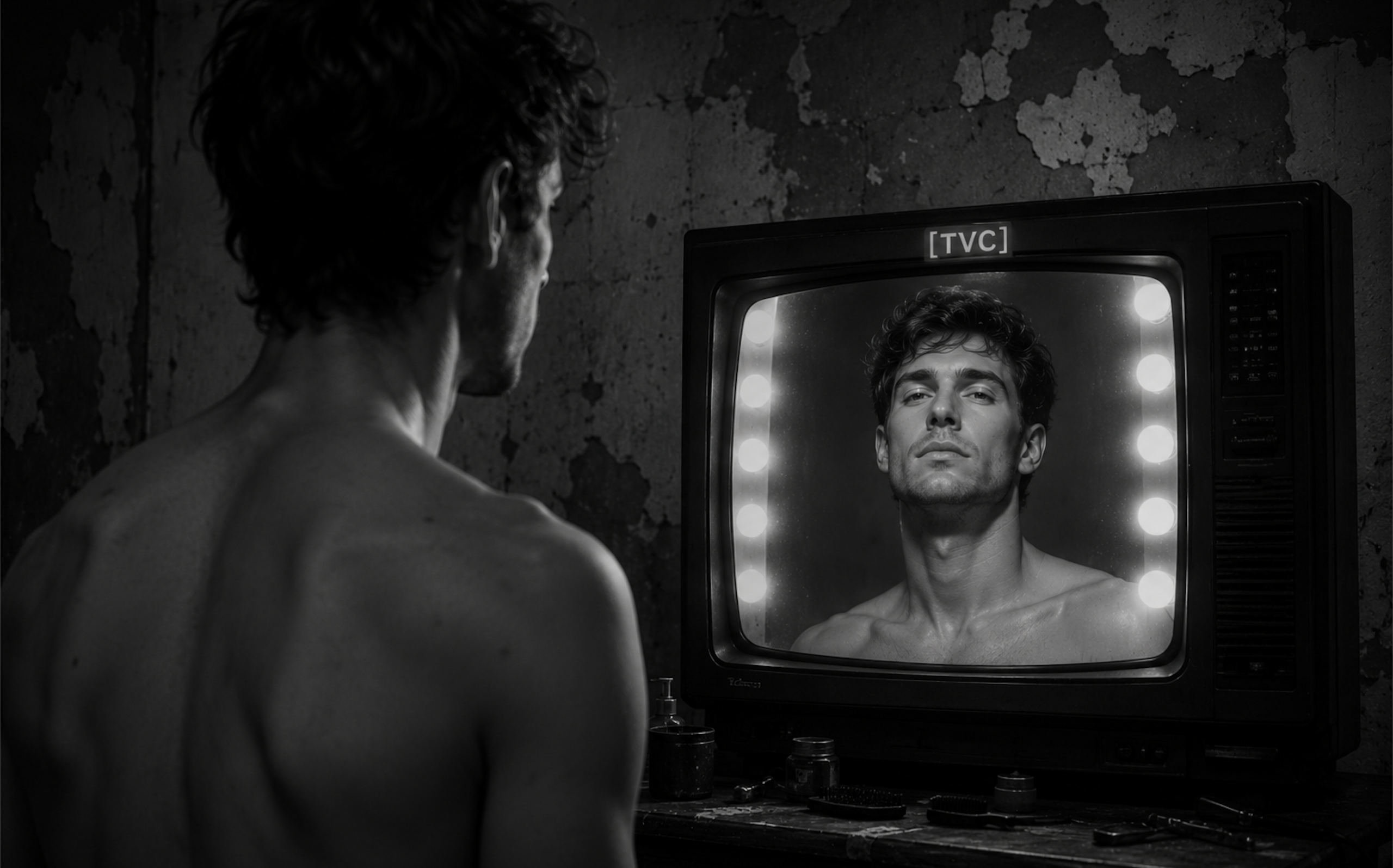
The father carrying his sleeping son in the commercial isn't the boy's father, that isn't his house, and the boy isn't really asleep: he was directed to close his eyes at the exact right moment. The steaming kitchen where grandma serves the stew is a set built in a warehouse in Pacheco. The tear in the close-up might be glycerin, or an actress who thought about something sad during the twenty seconds before.
None of this is a secret. It's the craft. We build scenes that look like truth in order to trigger emotions that really are true in whoever's watching. The audience cries at the commercial even though the father isn't a father, even though everything else is acted.
It's only a matter of time (very little time)
The other day we saw a comment on YouTube under an AI-made campaign: "it doesn't move me, you can tell it's AI." Just one, among many. But the point stands.
What if the issue isn't that AI doesn't move us, but that it's still detectable enough to pull you out of the "trance"? When you notice something is AI, you realize it's construction. And once you realize it's construction, you stop believing. Not because AI is worse at telling the story, but because it broke the invisible convention that kept you inside the story.
It's the same thing that happened with CGI twenty years ago, when you "could tell" and it pulled you out of the movie. Today nobody debates whether the dragon in a series is real. The detection threshold moved, and our tolerance moved with it.
Our bet is that the same thing will happen with AI, and it will happen fast. A year, two? three at most…? At some (very) near point we'll be watching a commercial made entirely with AI without noticing, just as today we don't notice that the steaming kitchen is built in Pacheco.
It just has to work
Advertising isn't a poetry session and it isn't art. It's an industrial production system designed to trigger emotional responses (purchase responses, really) in specific audiences at massive scale. To trigger those responses you don't need to have felt what you're portraying. You need to know what triggers what in whom, and execute it well.
If the entire production chain is already synthetic, staged, directed, post-produced, retouched and scored to achieve the desired effect — why should the idea that originates that chain be, of all things, "authentic" (human?) in order to work?
The honest answer is that it doesn't have to be. It just has to work.
If an AI produces an idea that, well executed, makes the audience cry just like a human idea would, no one is going to care where it came from. Not the client either. Nor the awareness or sales metric.
The debate about creative purity is a debate we creatives have among ourselves, along with a few ethics purists. The "general public" doesn't take part in that conversation, doesn't even think about it. Their concerns lie elsewhere.
We don't like this. But the fact that we don't like it doesn't make it any less true.
Our (only?) opportunity against AI
Without falling into the industry's defensive rhetoric, there are three places AI still can't reach — and where, on our bet, the value of our profession is going to concentrate:
- What is truly new (creative) and standout. Models are trained to produce the most probable response given what they've seen before. By mathematical design, they converge to the center of the distribution. Valuable creativity is often the opposite: it lives in the tails, in the improbable connection that in hindsight feels inevitable. Generating variations of the existing with extremely high fidelity, AI already does. Generating something that wasn't anywhere before, not yet — and that's where humans have the edge.
- Judgment and reading the moment. When an AI generates twenty solid directions for you in an hour, the bottleneck is no longer generating options — it's knowing which of the twenty is worth it. For this brand, with this story, at this moment in the market, against this competition. Integrating all those vectors into a decision that bets on one direction over another requires something AI doesn't have today: accumulated judgment, market intuition, holistic knowledge, and ultimately someone willing to sign off.
- Defending the idea, inside and outside the agency. The good idea isn't the one that gets dreamed up: it's the one that survives the client meeting, the committee's edits, legal's objection, the last-minute change, and makes it on air recognizable. Defending an idea takes conviction, negotiating skill and authority built over time. If the technical output becomes a commodity, the differentiator shifts to the trust with the client and the ability to fight for the idea everyone says is "too crazy." How many stories have we read of successful ideas that were born exactly that way? An AI doesn't have the same stake in defending them. That's relational, and 100% human.
Whoever clings to "AI can't really be creative" or "that commercial looks like AI" will end up trapped defending a border that keeps moving. Whoever understands that AI will keep doing more and more things better and better, and positions themselves where AI still can't reach or where humans add irreplaceable value, will have a shot.
Advertising was always "a lie" well told.
Nothing has changed in that sense.
_
Final note: to the purists who believe advertising isn't a "lie" … please consider the metaphor this idea encompasses … and its market reality in the selling of mass-consumer products.