BrandReport · NSB Agency. By Federico Soto Roland — Co-founder & Strategy, AI & Digital Director.
AI is having a major impact on how we do our strategic and creative work, on how we plan campaigns and media, and on how we produce content.
Yet today there are opposing reactions to the use of AI: some of us see it as the future, as something that simply can't be avoided; others position themselves as detractors because of its "synthetic" feel and its lack of a "human artistic touch."
In other articles we've already taken a stand at NSB: our agency believes that in communication nothing was ever "100% real." We've always operated within the "artificiality" of the advertising world, inventing situations, ideas, characters and products that are often far from real, in order to build an ideal world that amplifies desire and purchase decisions.
But we can't help feeling a certain natural aversion to something made 100% by AI. And this is where we start to draw the line between "AI as a tool" and "AI as the final delivery."
AI as the final delivery
Treating AI as the final delivery of our strategy, creativity or planning is dangerous, and it will become less and less effective. We've said it many times: AI standardizes, it feeds on averages rather than extremes; it analyzes very accurately and reliably, but it's poor at grasping the cultural nuances that live beneath the surface; it can read a history book but lacks the "feel for the momentum," and it doesn't have the holistic capacity of an expert human who knows the context, the past, the history and the real sentiment of a specific market.
If an agency treats AI as the final delivery, it isn't doing its job, and the client ends up with a standard product that "reeks of AI" — and right now, as of June 2026, nobody likes that.
AI as a tool
But if we treat AI as a fundamental, central tool of the new creative-strategic process, and we refine it, feed it, iterate on it and improve it with expert human knowledge, the potential is incredible. This is where the line is drawn between AI used well and AI used badly.
At NSB we say there's nothing worse than "a monkey with AI," because the power of positive transformation and productivity gains that AI gives us can also turn into a harmful tool in the wrong hands.
Copy with that particular cadence. Images with that plastic, characterless perfection. Strategies that sound like a summary of everything that's already been said. The so-called AI-slop: content that exists, that ticks the box, that offends no one — and that no one remembers. That isn't using AI professionally. It's outsourcing the judgment your agency is supposed to bring.
What AI is good for when it's used well
The real potential of AI in an agency isn't producing the same old things faster. It's making possible what used to be impossible — because of time, cost or technical complexity.
There are five dimensions where this becomes concrete:
- Insights and testing that used to require weeks of research can now be obtained far more nimbly, at a significantly lower cost.
- Products and projects that previously fit no budget are now feasible, leveling the field between small advertisers and those with bigger marketing budgets.
- Creative production that scales without losing judgment: more content, better produced, at a lower cost.
- Automation of repetitive processes that eat up time and talent.
- Iteration at a speed that changes the logic of testing.
An agency that gets this doesn't deliver more volume. It delivers different things — projects you'd previously have ruled out on budget, analysis that used to require consultancies, applications that used to need an in-house development team.
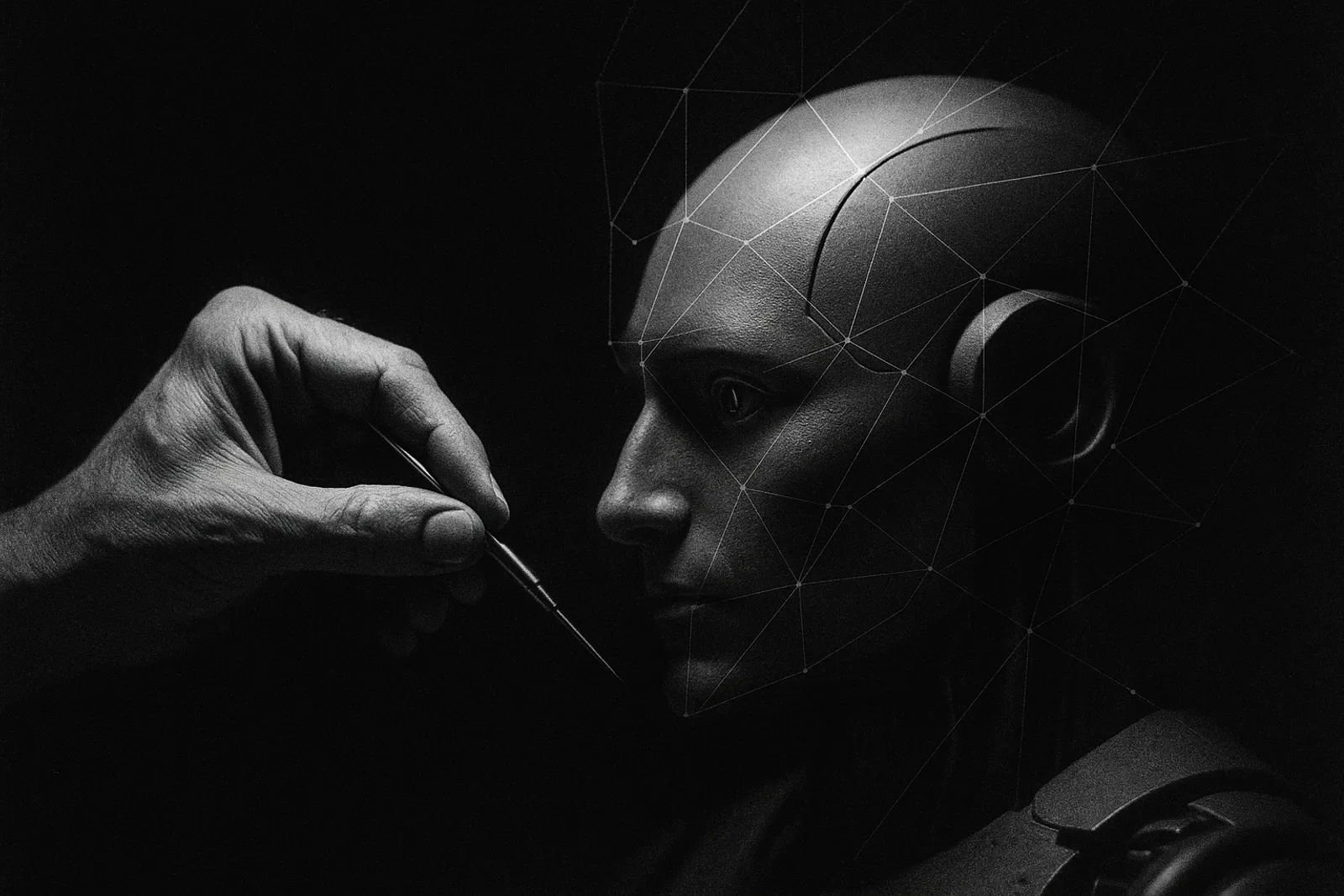
The job of a professional agency is to use AI as a surgical precision tool. To know when to apply it, at what stage of the process, with what level of human intervention, and how to make sure the final output doesn't give the process away.
We're on the right track if the agency shows you something you literally couldn't have asked for two years ago — and when you see it, you can barely tell there's AI involved anymore. You think about the result!
The questions worth asking
1. What projects can we do now that we couldn't before?
An agency that has genuinely integrated AI into the way it works has a list of things it can now offer that didn't exist in its catalog eighteen months ago. Lightweight apps for mid-sized clients. Real-time competitive monitoring systems. Concept-level audiovisual production with no need for sets or casts. Testing creative before investing in production.
If the answer is "basically the same thing but faster," you already know what you needed to know.
2. How do we make sure the work doesn't "feel like AI"?
Anyone can use AI to generate copy, images, video and new ideas. Few can guarantee that what's generated goes through a real refinement process — of editing, of judgment, of fitting it to the brand's tone — that turns it into something of its own. The answer you're looking for isn't technical. It's about process and about who holds the final judgment on every deliverable.
3. How much human talent is behind it — and at what stage of the process?
AI doesn't replace creative judgment, it amplifies it. In an agency that works well, human talent is concentrated where it matters most: defining the problem, creative direction, the final edit. Not on repetitive tasks a machine can do in seconds.
4. How fast can they iterate?
One of the most concrete changes that well-used AI brings is the compression of work cycles. What used to take two weeks can take days. That isn't just efficiency — it changes the logic of how creative and media decisions get made.
What this means in practice
The market today has two kinds of agencies, even if both say the same thing in their pitch. The ones that added AI as a speed layer on top of their old model — and the ones that redesigned what they can do and how they do it.