A summary of a key research report on today's buying processes, produced by NSB Agency's Brand Strategy team.
This Google document isn't just a metrics analysis; it's an X-ray of how digital abundance has transformed buyer psychology.
Two different worlds: a paradigm shift
To understand the study, we need to picture the contrast between two eras of consumption:
The "Physical Street" versus the "Internet Street"
Before the arrival of the web, we shopped on a "physical street". If you needed a product, your options were limited by geography and the inventory available in nearby stores. In that world of information scarcity, mass brands were the absolute beacon of trust: you bought what you knew to play it safe.
Today, the report invites us to walk down "Internet Street", an infinite commercial district, open 24/7, where any store in the world is a blink away. If you don't know what you want, there are places that let you filter, sort and compare every existing product. On top of that, you have millions of people willing to tell you about their experience with what they bought.
The big takeaway of this story: our human instincts, shaped by thousands of years of scarcity, suddenly came face to face with an absolute wealth of options. To keep from going crazy in the face of so much complexity, we activate psychological survival mechanisms: mental shortcuts (cognitive biases).
The evolution from "Cheap" to "Best"
Through Google Trends, the Google-sponsored research team uncovered a fascinating historical narrative using UK data:
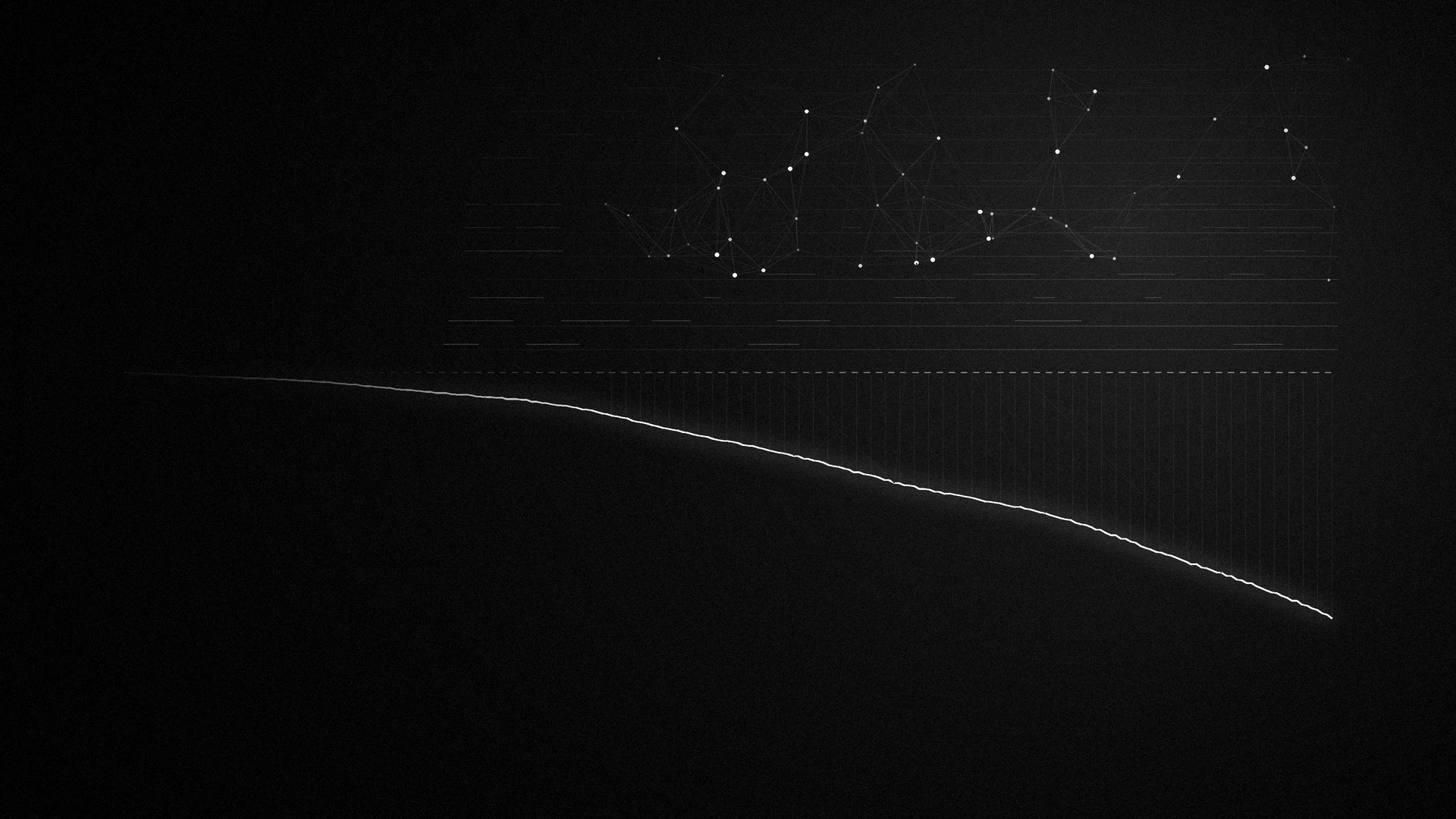
- Starting in 2004, the volume of searches that included the word "cheap" began a sustained decline.
- At the same time, searches with the word "best" began to rise with an almost perfect negative correlation.
- The turning point: The two lines crossed in 2009.
What's interesting is the macroeconomic context: in 2009 the world was going through the worst financial crisis since 1929 and household incomes were falling. You'd think people would search more for "cheap," but the opposite happened. Why? Because "cheap" is a mathematical, rational calculation, but "best" is subjective, complex and emotional.
The internet stopped being a simple price-comparison ticket machine and became a tool for comparing absolutely everything.
The Scientific Model: Riders and Elephants
To explain behavior in this new environment, the report draws on a famous analogy by psychologist Jonathan Haidt about how reason and emotion interact:
Rational thinking is a Rider and emotion/instinct is an Elephant. The rider believes he holds the reins and chooses the path, but the moment a stimulus awakens a primal desire in the elephant, the giant charges and the rider loses control.
When you ask a buyer why they chose a brand, the "rider" rationalizes and guesses at the answer, but the real decision happened unconsciously, in the "elephant."
The space where the elephant runs loose and moves back and forth is the Messy Middle. After analyzing hundreds of historical marketing models (like the linear AIDA funnel from 1898), Google determined that the process is no longer a funnel where the customer advances in a straight line. It's an infinite "figure-eight" loop between two cognitively distinct mental states:
- Exploration (Expansive Activity): The consumer actively seeks information, discovers new options and expands their range of brands (their consideration set).
- Evaluation (Reductive Activity): The consumer tires of searching, weighs the accumulated options and starts narrowing down to make a decision.
People flow constantly between exploring and evaluating (one day they add options, the next day they discard them, then they go back to searching) until a brand breaks the loop and the purchase happens.
The Comparative Research (Methodology)
The study wasn't based on opinion surveys ("which brand do you like?"), but on observing behavior in real time through two combined methodologies:
- Direct Behavioral Observation: They analyzed more than 300 hours of screen, audio and video recordings of 310 real consumers carrying out online shopping tasks across 31 different product categories. The goal was to see exactly how many tabs they opened, how they jumped from one site to another and how they changed their minds halfway through.
- Large-Scale Statistical Experiment (Conjoint Analysis): To quantify the exact impact of biases, they built a simulated shopping website, generic and with no branding of its own.
- They recruited 31,000 in-market shoppers (1,000 for each of the 31 categories) who said they were about to buy a product in real life.
- Each participant was asked to identify their 1st favorite brand and their 2nd favorite brand in their category.
- They were then exposed to 10 simulated shopping scenarios (a total of 310,000 scenarios analyzed) where they had to choose between pairs of brands. The variables modified under controlled conditions weren't prices (which were kept stable at market value), but the presence and intensity of 6 behavioral-science biases.
The Clinical Findings of the Experiment
Here are the most striking figures your team needs to take in:
Finding 1: The superpower of "Showing Up"
The first experiment pitted the 1st favorite brand against the 2nd favorite brand, keeping all biases neutral (same stars, same delivery times, etc.).
- The result: Simply introducing the second-favorite brand onto the screen caused 30% of buyers to abandon their first choice in the SUV category. In the car insurance category, the figure rose to 40%.
Conclusion: Mental and visual availability is the first line of defense. If you're not present when the customer is deliberating in the messy middle, you automatically lose a massive share of the market, no matter how much money you spent on prior advertising.
Finding 2: The "Supercharging" effect
What happens if the second-favorite brand uses behavioral science perfectly and the first-favorite brand stays static?
- When the second option was supercharged with competitive advantages based on biases (for example: 5-star ratings versus the competition's 3 stars, next-day delivery, an independent expert's endorsement and a free perk), 90% of consumers abandoned their favorite shampoo brand.
- In the vacation-package category, 88% of people switched their initial preference.
Conclusion: you have to supercharge your reviews, assess your delivery times, how experts and influencers play into the evaluation of your brand, what your "free" or trial hook is, your guarantees, etc. — or a not-so-well-positioned brand could take the business away from you.
Finding 3: The "Wildcard" experiment (Starting from scratch)
This is the most alarming finding for leading brands and the most hopeful for new brands. The researchers introduced completely fictional brands (invented for the test, with believable logos but zero reputation or prior advertising investment; exposure level equal to zero).
- Gem Mobile (Mobile Phones): A fictional brand supercharged with cognitive biases snatched 50% of preference from the market's real leading brands.
- Intergo (Internet Providers): The made-up brand managed to capture an impressive 73% of preference against the industry giants.
- The tactical exception: The category that was hardest for a fictional brand to hack was breakfast cereal (Honey C’s), where the invented brand only managed to move 28% of users. This suggests that in mass-consumer categories tied to taste and family routine, historical brand loyalty is extremely rigid.
Conclusion:
If you're the leading brand: we're in constant, silent danger from emerging digital-native competitors or direct-to-consumer (D2C) models that travel lighter and execute these psychological tactics better.
If you're the challenger or new brand: the messy middle is our biggest window of opportunity. We don't need multimillion-dollar TV budgets to compete with the giants; we need to be surgical about how we structure biases on our website to divert their sales toward us.
Finding 4: Hierarchy of Biases — what moves the needle most?
Not all psychological biases carry the same weight. The comparative study revealed a clear hierarchy:
- Social Proof: It was the most powerful bias in the digital world. It had the number-one or number-two impact in 28 of the 31 categories tested. Reviews and 5-star ratings act as an irresistible magnet for the emotional "elephant."
- The Power of Free: It had the primary or secondary impact in 18 of the 31 categories (such as offering free checked baggage on short flights or an extra day on a car rental). A price of exactly zero unleashes an irrational excitement that destroys prior loyalty.
- Category Heuristics: Crucial in financial and highly complex products (e.g., clearly highlighting "no-claims bonus protection" in insurance or "fixed-rate months" in mortgages). Simplifying technical information lifts cognitive load off the brain.
- Scarcity Bias: Surprisingly, it was the least effective in the general exploration stage. Applied too early, the consumer feels their freedom to choose is being curtailed and it triggers psychological pushback.
The big discussion: the new marriage between Branding and Performance
"The Messy Middle has destroyed the traditional boundary between Branding (making pretty TV ads) and Performance (running direct-conversion ads)."
We often hear endless debates inside companies: "Should we put the money into branding campaigns to position the brand for the long term, or into performance to generate sales today?".
The Messy Middle shows that this debate makes no sense; they're two sides of the same coin.
- Branding is your shield (the exposure layer): the report demonstrated the Overdog Effect. Despite all the psychological offers working against it, a critical mass of consumers stayed loyal to their favorite brand simply because they knew and trusted it. Branding builds the unconscious resistance that keeps the competition from stealing your customer. It's what plants the seed of preference.
- Performance is the close: the set of tools that act at the final touchpoint. If your brand is strong but your website experience is slow, you don't show reviews or your copy is confusing, you're dropping your shield to the floor. Any new brand that handles the psychology of the messy middle better will steal the sale from you in the last second.
WATCH OUT FOR DISCOUNTS!: a vital warning about traditional discounts: the report found that 73% of people who search for "discount codes" already include the store's name in the search.
What does this mean? That pure discounting doesn't work to attract new customers in the exploration stage; it's simply the ultimate closing tool for the user who already chose you and just needs the final economic nudge to hit "buy."
Conclusion
The internet has given the consumer absolute power of choice. The brands that will win in the future will be the ones capable of building a solid long-term identity, but that at the same time understand behavioral psychology well enough to give the buyer the information, the reviews and the speed they need to exit the digital maze with a successful purchase.